
AAA Food Handler

Food Safety Regulations: Complete Guide for Food Businesses

Food safety regulations

Food safety regulations are legally enforceable rules established by federal and state agencies to ensure that food produced, processed, and sold in the United States is safe for human consumption. These regulations govern everything from how food is handled and stored to how facilities are inspected and how workers are trained.

For food businesses, understanding these regulations is not optional. Non-compliance can result not just in penalties, facility closures, and product recalls but also in serious public health consequences.

AAA Food Handler was built to help food workers and managers navigate exactly this regulatory requirement. Our courses help you meet requirements enforced by federal agencies and state health departments, translating them into practical, job-ready knowledge before a worker ever handles food.

This guide answers the most frequently asked questions about food safety regulations, including who enforces them, what they require, and how businesses can stay compliant.

What Are Food Safety Regulations?

Food safety regulations are legally binding rules that set minimum standards for how food must be handled, processed, stored, transported, and sold to protect public health.

In the United States, these regulations are established at the federal level by agencies such as the Food and Drug Administration and the U.S. Department of Agriculture and are further enforced by state and local health departments. They apply across the entire food supply chain, from farms and manufacturing facilities to restaurants, retailers, and food service operations.

The purpose of food safety regulations is to prevent foodborne illness, protect consumers, and ensure that food businesses operate within defined safety standards.

Why Are Food Safety Regulations Important?

15-2

Food safety regulations are important because they protect public health by reducing the risk of foodborne illness, contamination, and unsafe food reaching consumers.

Without enforceable standards, there would be no consistent requirement for businesses to control food safety hazards, train their workers, maintain sanitary conditions, or label products accurately.
The consequences of unregulated food handling extend beyond individual illness to widespread public health emergencies.

According to the Centers for Disease Control and Prevention, approximately 48 million Americans experience foodborne illness each year, resulting in roughly 128,000 hospitalizations and 3,000 deaths. Food safety regulations exist to reduce that burden by establishing minimum preventive standards across every point in the food supply chain.

Who Enforces Food Safety Regulations in the United States?

Food safety regulations in the United States are enforced by multiple agencies operating at the federal, state, and local levels, each with distinct oversight responsibilities.

The primary federal agencies involved are:

  • The Food and Drug Administration, which oversees most food products, including produce, seafood, dairy, packaged foods, and dietary supplements
  • The U.S. Department of Agriculture Food Safety and Inspection Service, which regulates meat, poultry, and egg products
  • The Centers for Disease Control and Prevention, which investigates foodborne illness outbreaks and tracks food safety data at the national level 

At the state and local level, health departments enforce food safety codes for restaurants, food trucks, grocery stores, and other retail food establishments through routine inspections and licensing requirements.

What Is the FDA Food Code?

The FDA Food Code is a model set of food safety guidelines published by the Food and Drug Administration that serves as the foundation for food safety regulation across the United States.

The current edition is the 2022 Food Code, the 10th edition published by the FDA, with a 2024 Supplement issued in November 2024 that updated guidance on sanitation procedures, disinfection of food contact surfaces, and container reuse practices. The Food Code is updated on a four-year cycle, with supplements issued between full editions to reflect new food safety science and regulatory priorities.

The Food Code is not a federal law, but it functions as a science-based reference that states use to develop and update their own retail food safety regulations.
Most states base their food safety codes on the FDA Food Code framework, which means its standards effectively shape food safety requirements for the majority of food service operations nationwide.

The Food Code covers critical areas including temperature control, personal hygiene, food source requirements, equipment sanitation, and facility design.

What Is the Difference Between FDA and USDA Food Regulations?

The FDA and USDA regulate different segments of the food supply, and understanding the distinction matters for food businesses determining which agency’s rules apply to their operations.

The FDA regulates approximately 80 percent of the U.S. food supply, including fruits, vegetables, seafood, dairy products, packaged and processed foods, bottled water, and dietary supplements. The USDA’s Food Safety and Inspection Service regulates meat, poultry, and processed egg products, which account for the remaining portion of the federally regulated food supply.

For food businesses that handle both USDA and FDA regulated products, such as a facility that processes both poultry and produce, compliance requirements from both agencies may apply simultaneously. Understanding which regulatory framework governs each product category is a foundational step in building an accurate compliance program.

What Does FSMA Require of Food Businesses?

FSMA, the Food Safety Modernization Act signed into law in 2011, is the most significant overhaul of U.S. food safety law in decades and directly shapes what the FDA requires of food businesses today.

FSMA shifted the federal approach to food safety from responding to contamination events to preventing them before they occur. The primary implementing rule for food manufacturers is the Preventive Controls for Human Food regulation, codified at 21 CFR Part 117, which has been in full effect since 2018.

Under FSMA and 21 CFR Part 117, most registered food facilities are required to:

  • Develop and maintain a written food safety plan
  • Conduct a hazard analysis to identify biological, chemical, and physical risks
  • Establish preventive controls to address identified hazards
  • Monitor and verify that preventive controls are working effectively
  • Maintain detailed records documenting all of the above

FSMA also introduced requirements for produce safety, foreign supplier verification, and third-party auditing for certain high-risk food categories. For food businesses operating under FDA oversight, FSMA compliance directly determines what inspectors evaluate during facility reviews

What Are the Most Important Food Safety Regulations Food Workers Must Know?

15-3

Food workers are directly responsible for implementing the standards that food safety regulations require, which makes practical regulatory knowledge essential for every person handling food.

The regulatory areas food workers are most commonly required to understand and apply include:

  • Personal hygiene standards, including handwashing procedures and illness reporting requirements
  • Temperature control requirements for cooking, holding, cooling, and reheating food
  • Cross-contamination prevention through proper food storage, handling, and equipment use
  • Allergen awareness and the requirement to accurately communicate allergen information to consumers
  • Sanitation procedures for food contact surfaces, equipment, and utensils
  • Food source requirements, including purchasing only from approved and licensed suppliers

Many states require food workers to hold a valid food handler card and require at least one certified food manager in every food service operation. These certification requirements exist because worker knowledge is the primary mechanism through which food safety regulations translate into safe food handling practices on the floor.

AAA Food Handler’s courses are structured around these exact regulatory knowledge areas, built to reflect what state agencies, health departments, and FDA guidance identify as the core competencies food workers must demonstrate in the workplace.

Do Food Safety Regulations Apply to Restaurants?

Yes, food safety regulations apply to restaurants, and restaurants are among the most closely regulated food businesses in the United States.

Restaurants are primarily subject to state and local food safety codes, which are typically based on the FDA Food Code. These codes govern food handling practices, employee hygiene, temperature control, facility sanitation, pest control, and equipment standards.

Most jurisdictions require at least one certified food protection manager to be on-call or present during operating hours, and many states require all food service workers to hold a valid food handler card. Restaurants are subject to routine health department inspections, and violations can result in fines, required corrective actions, or temporary closure.

What Are the Consequences of Violating Food Safety Regulations?

Violating food safety regulations can result in a range of consequences depending on the severity of the violation, the regulatory authority involved, and how quickly the business responds.

Common consequences of food safety violations include:

  • Warning notices or citations issued during health inspections
  • Fines and mandatory corrective action requirements
  • Temporary closure or suspension of operating permits
  • Product recalls for contaminated or mislabeled food
  • Civil or criminal liability in cases involving serious illness or death
  • Reputational damage that affects consumer trust and long-term business revenue

Businesses that identify compliance gaps and address them proactively are consistently better positioned to avoid escalating consequences. Understanding the food safety laws that govern your specific business type and jurisdiction is the starting point for managing these risks effectively.

How Can Food Businesses Stay Compliant With Food Safety Regulations?

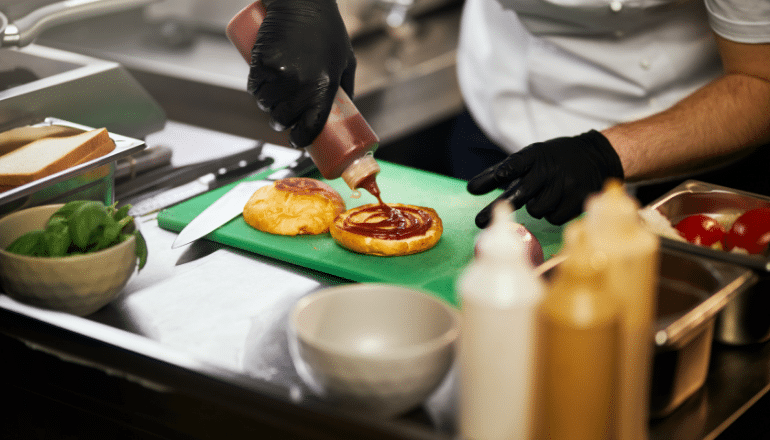
male-pouring-ketchup

Staying compliant with food safety regulations requires establishing consistent operational practices rather than just preparing for inspections or complaints after problems arise.

Food businesses that maintain strong compliance programs typically follow these foundational practices:

  • Keeping food safety plans and hazard documentation accurate and reflective of day-to-day facility operations 
  • Ensuring all food workers complete required training and hold valid certifications for their roles
  • Conducting regular internal audits to identify and correct gaps before inspections occur
  • Following temperature control, sanitation, and personal hygiene standards daily without exception
  • Maintaining accurate, organized records of all food safety monitoring and corrective actions
  • Verifying that all food is sourced from approved, licensed, and regulated suppliers

Compliance is not a one-time achievement. Regulations evolve, food safety guidelines are updated, and staff turnover creates ongoing training needs that must be addressed continuously.

Why Is Food Safety Training Required for Regulatory Compliance?

Food safety training is required for regulatory compliance because regulations do not enforce themselves. The standards written into food safety law only reduce risk when the people responsible for food handling understand and consistently apply them.

Most states require food workers to complete accredited food handler training and require at least one certified food protection manager in every food service operation. These requirements exist because inspection data and outbreak investigations consistently identify employee knowledge gaps as among the most common root causes of food safety violations and foodborne illness events.

Training ensures that workers understand not just what to do, but why it matters and what the regulatory consequences of failing to do it are. Documented, consistent training also demonstrates to inspectors that a business is operating with a genuine food safety culture rather than minimum procedural compliance.

Why Choose AAA Food Handler?

Food safety regulations set the standard. Your team determines whether those standards are actually met every shift.

AAA Food Handler provides accredited food handler and food manager training programs that cover the specific regulatory knowledge state agencies, health departments, and FDA guidance identify as essential for food workers and managers at every level.

From personal hygiene and temperature control to allergen management and FSMA-aligned preventive practices, AAA Food Handler courses translate regulatory requirements into practical, job-ready knowledge that workers can apply from day one.

Build a team that understands the regulations and meets them consistently.

FOOD HANDLER

Food Handler Card
4.9
(41,495 reviews)
Review image 2

Starting at $6.95

FOOD MANAGER

Food Manager Certification
4.9
(11,772 reviews)
Review image 5

Starting at $49.95

ALCOHOL

Alcohol Server Training
4.8
(2,972 reviews)
Review image 3

Starting at $7.95

ALLERGEN

Allergen Awareness Training
4.9
(382 reviews)
review images 1

Starting at $12.95

HARASSMENT

Sexual Harassment Prevention
5.0
(5 reviews)
review image

Starting at $6.95

Get Your Online Training
With AAA Food Handler!

Our comprehensive training programs are designed to meet your area's requirements.

Click a program to start today!

AAA Food handler USA
4.9
(41,495 reviews)
Review image 2
4.9
(11,772 reviews)
Review image 5
4.8
(2,972 reviews)
Review image 3
4.9
(382 reviews)
review images 1
5.0
(5 reviews)
review image
4.9
(41,495 reviews)
Review image 2
4.9
(11,772 reviews)
Review image 5
4.8
(2,972 reviews)
Review image 3
4.9
(382 reviews)
review images 1
5.0
(5 reviews)
review image
AAA Food handler USA

OUR CLIENTS